
Executive Summary: After years of experimentation, business leaders are entering 2026 with a clear mandate: make AI investments pay off, but do it in a way that stakeholders can trust. In enterprise settings, artificial intelligence is no longer a speculative pilot project; it’s a business-critical asset whose success or failure hinges on trust, transparency, and accountability.
Recent industry analyses show a striking gap between AI ambition and actual returns — only 14% of CFOs report measurable ROI from AI to date, even though 66% expect significant impact within two years. This optimism comes with a sobering realization: without verifiability and integrity at every level, AI projects risk underdelivering or even backfiring. An MIT study reveals that up to 95% of firms investing in AI have yet to see tangible returns, often because of hidden flaws, opaque models, or poor data foundations. In response, companies are pivoting from hype to hard results — “after years of pilots, firms are shifting focus to monetization” in AI initiatives.
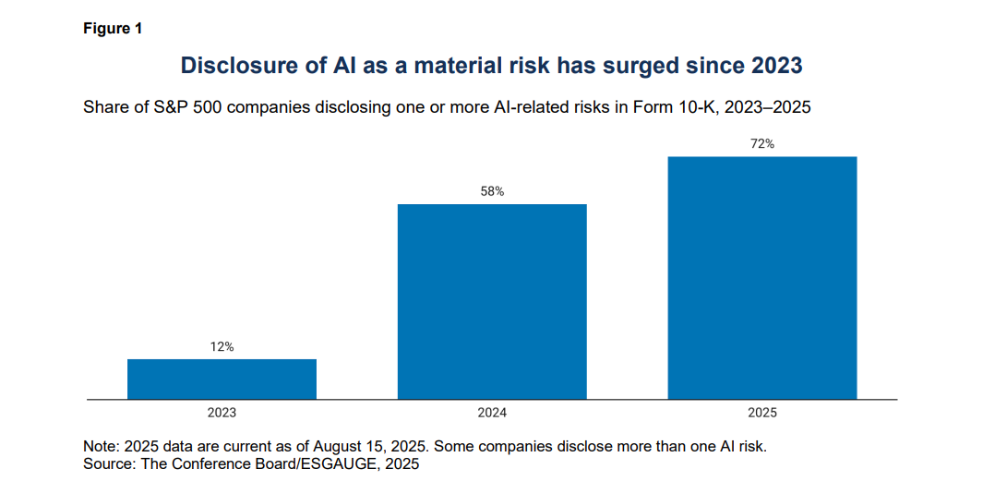
The result is a strategic shift: trustworthy AI infrastructure is becoming a business advantage rather than a compliance burden.
This article outlines five key AI trends for 2026, each mapped to a layer of the I-DIKW framework (Integrity, Data, Information, Knowledge, Wisdom). These trends show how aligning AI efforts with integrity at every level enables organizations to unlock ROI amid regulatory scrutiny and competitive pressure.
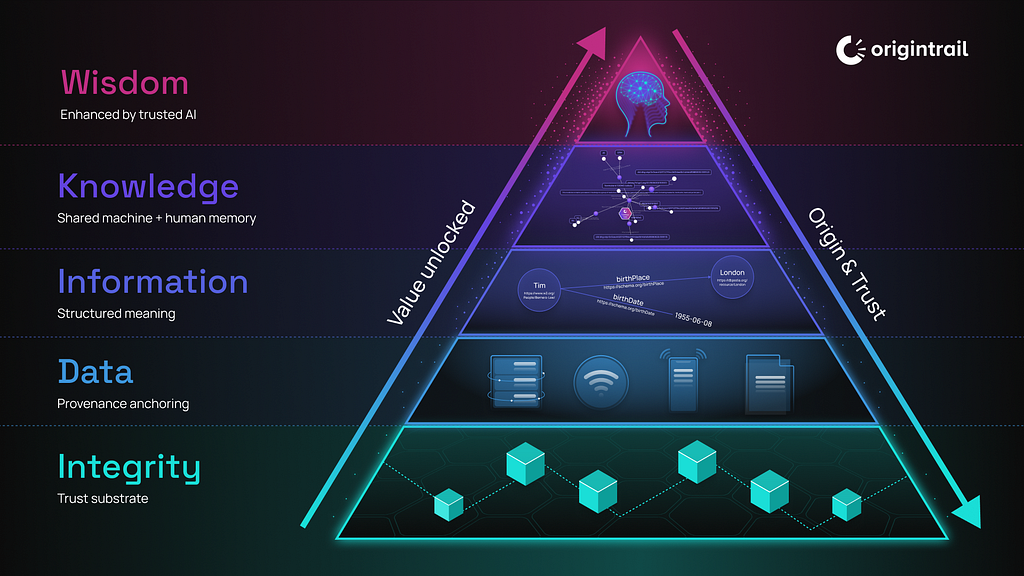
Trend 1: Integrity Layer — Trustworthy AI Infrastructure by Design
Integrity is the foundation of the I-DIKW framework: it’s about building AI systems that are trustworthy and verifiable from the ground up. In 2026, leading firms will treat AI integrity (security, ethics, and transparency) as a first-class requirement. This means baking in cryptographic provenance, audit trails, and robust governance controls into AI platforms. For example, new architectures use immutable provenance chains and digital signatures to ensure every AI input and output can be traced and verified. Such measures give executives and regulators high confidence in the integrity of AI outputs.
The business payoff is significant: integrity by design reduces the risk of AI failures, bias incidents, or data leaks that can derail ROI. Companies that invested early in trust infrastructure are finding their AI projects scale faster and face fewer roadblocks from compliance or public concern. Conversely, a lack of integrity can be a deal-breaker. Case in point: the government of Switzerland rejected a prominent AI platform (Palantir) after finding it posed “unacceptable risks” to data security and sovereignty. Swiss evaluators concluded the system couldn’t guarantee full control or transparency, raising alarms about dependence on a foreign black-box solution.
The lesson for CIOs and CEOs is clear: if an AI system can’t prove its integrity and accountability, savvy clients (and regulators) will walk away. In 2026, trustworthy AI by design will be a strategic imperative, enabling organizations to deploy AI confidently and at scale, turning trust into a competitive advantage rather than a cost.
Trend 2: Data Layer — Sovereign Data and Quality Foundations
Moving up the hierarchy, Data is the raw material for AI — and its quality and governance determine whether AI initiatives thrive or falter. It’s well known that garbage in leads to garbage out, yet many organizations still underestimate how data issues sabotage AI ROI. Executives may invest millions in AI tools, only to find that the tools can’t deliver value because the underlying data is incomplete, biased, or untrustworthy. A recent survey of CFOs found that poor data trust is the single greatest inhibitor of AI success — 35% of finance chiefs cite lack of trusted data as the top barrier to AI ROI. It’s no wonder only 14% have seen meaningful AI value so far.
Data sovereignty is a particularly hot issue. Companies and governments alike want assurance that critical data remains under their control. This is driving a trend toward “sovereign AI” solutions — those that allow data to be kept locally or in trusted environments, rather than forcing lock-in to a vendor’s cloud. Europe’s upcoming regulations emphasize data localization and digital sovereignty, reinforcing this shift. The stakes became evident when Switzerland’s defense authorities rejected Palantir’s AI software after a risk assessment warned it could leave Swiss data vulnerable to U.S. jurisdiction. In the evaluators’ words, “No foreign software should compromise our ability to control and protect sensitive national information.”
For businesses, the takeaway is that control over data = trust. In 2026, leading enterprises will choose AI platforms that offer transparent data handling, open standards, and interoperability so they aren’t handcuffed to a single provider. By building sovereign data ecosystems — for instance, using decentralized data networks — organizations ensure data integrity and privacy, which in turn unlocks AI value. When your data is high-quality, compliant, and under clear ownership, AI initiatives can progress without the hidden friction that often stalls pilots. In short, trusted data is the fuel for AI ROI.
Trend 3: Information Layer — Explainable and Verifiable AI Insights
Turning raw data into actionable Information is the next layer — and in 2026, the key word is “explainable”. As AI systems generate reports, recommendations, and content, organizations are realizing that if the people using that information don’t trust it, the AI investment is wasted. Thus, a major trend is the adoption of explainable AI (XAI) and verifiable AI outputs. Business leaders want AI that not only does the analysis but can show its work — revealing the logic, source data, or confidence behind an output.
This trend is fueled by both internal needs (e.g. a manager trusting an AI-generated forecast) and external pressure. Regulators are stepping in: the EU’s AI Act, for example, includes transparency obligations requiring that users be informed when they interact with AI or encounter AI-generated content. Draft European guidelines even call for marking and labeling AI-generated media to curb misinformation. Likewise, in the U.S., authorities have encouraged AI developers to implement watermarking for synthetic content. The message is clear — 2026 is the year when “black box” AI won’t cut it in many business applications.
Companies are responding by building trust layers around AI information. One approach is integrating cryptographic provenance: for instance, embedding invisible signatures in AI-generated content or logs that allow anyone to verify where it came from and whether it’s been altered. Another approach is to leverage verifiable credentials for information sources, ensuring that data feeding AI models (or experts providing oversight) is authenticated and reputable. Forward-looking firms are also deploying AI explainability tools — from simple model scorecards that highlight key factors in an AI decision, to advanced techniques that trace an AI recommendation back to the supporting facts.
A practical example is in financial services: banks deploying AI credit scoring are using explainable models and audit trails so that each loan decision can be explained to a regulator or customer, building trust and avoiding compliance roadblocks. In the realm of generative AI, companies are pairing large language models with knowledge bases and fact-checking mechanisms to prevent hallucinations from reaching end-users. In essence, information generated by AI is becoming self-documenting and self-verifying. By making AI’s information outputs transparent, explainable, and traceable, businesses not only mitigate risk but also encourage greater adoption — employees and customers are far more likely to use AI-driven insights when they can trust the why behind the answer. The result is faster decision cycles and more impactful AI use, directly boosting ROI.
Trend 4: Knowledge Layer — Decentralized Knowledge Networks and Collaboration
The Knowledge layer elevates information into shared organizational intelligence. In 2026, a standout trend will be the rise of decentralized and verifiable knowledge networks as the backbone of AI-powered enterprises. Organizations have learned that AI projects in isolation often hit a wall — the real value emerges when insights are captured, linked, and reused across the company (and even with partners). To enable this, companies are turning to knowledge graphs and collaborative AI platforms that break down silos. Crucially, these knowledge systems are being built with trust and verification in mind. Every contribution to a modern enterprise knowledge graph can be accompanied by metadata: who added this insight, from what source, and with what evidence?
A powerful enabler here is the convergence of blockchain (decentralization) and AI. By combining blockchains’ distributed trust with AI-driven knowledge graphs, organizations create shared knowledge ecosystems that no single party solely controls — yet everyone can trust. For example, in supply chain and manufacturing, partners are beginning to contribute to decentralized knowledge graphs in which data on product quality and provenance are cryptographically signed at each step.
One notable case: Switzerland’s national rail company (SBB) uses a decentralized knowledge graph for real-time traceability of equipment data, ensuring all stakeholders see a single source of truth with integrity. In such networks, verifiable credentials play a role too — only authorized contributors (with digital credentials) can add or modify knowledge, preventing bad data from polluting the system. The benefit to ROI is clear: when knowledge is integrated and trusted, AI can draw on a much richer context to solve problems, and organizations avoid the costly mistakes of inconsistent information.
Moreover, a decentralized approach reduces vendor lock-in and increases resilience — knowledge isn’t trapped in one platform, it’s part of a federated infrastructure the company owns. Leaders are also finding that trusted knowledge sharing accelerates innovation: teams reuse each other’s AI-derived insights instead of reinventing the wheel. As Dr. Robert Metcalfe (inventor of Ethernet) observed, knowledge graphs can “improve the fidelity of artificial intelligence” by grounding AI in verified facts. In 2026, companies that master this knowledge layer — creating a living, vetted memory for the organization — will reap compounding returns from each new AI deployment, as each project makes the next one smarter and faster.
Trend 5: Wisdom Layer — AI Governance and Strategic Alignment for Sustainable ROI
At the top of the I-DIKW stack is Wisdom — the ability to make prudent, big-picture decisions. For enterprises, this translates to strong AI governance and strategic alignment at the leadership level. The trend for 2026 is that AI is no longer just the domain of IT departments or innovation labs; it’s a C-suite and boardroom priority to ensure AI is used wisely, ethically, and in line with the company’s goals. One telling sign: nearly 61% of CEOs say they are under increasing pressure to show returns on AI investments than a year ago. This pressure is forcing a new alignment between tech teams and business leaders. We see the emergence of Chief AI Officers and cross-functional AI steering committees to govern AI initiatives with a balance of innovation and risk management. In practice, companies are establishing AI governance frameworks — formal policies and oversight processes to supervise AI model development, deployment, and performance.
According to recent research, about 69% of large firms report having advanced AI risk governance in place, though many others are still catching up. In 2026, closing this governance gap will be crucial. Effective AI governance ensures that there is “wisdom” in how AI is applied: systems are tested for fairness, AI-driven decisions are subject to human review when needed, and AI strategies align with business values and compliance requirements.
This strategic alignment of AI yields tangible ROI by preventing missteps and unlocking faster adoption. Companies with mature governance can deploy AI in customer-facing processes or critical operations with confidence that they won’t run afoul of regulations or ethics scandals. In contrast, firms that push AI without guardrails often face costly setbacks — whether it’s a PR crisis over biased AI results or a regulator halting a project.
Moreover, organizations are starting to augment their internal governance with collaborative, cross-industry safety nets. For instance, Umanitek has introduced a decentralized “Guardian” agent to coordinate AI safety across platforms. Guardian can fingerprint and cross-check content against a shared knowledge graph of known illicit or deceptive media, blocking harmful deepfakes or flagged materials in real time. Crucially, this approach preserves privacy and data ownership for all participants: each contributor’s data stays private while the agent exchanges trust signals via a permissioned decentralized network . By leveraging such cross-industry trust infrastructure, enterprises effectively extend their AI governance beyond their own walls, aligning multiple AI agents and stakeholders to uphold common integrity standards. This kind of collaborative safeguard strengthens the wisdom layer by ensuring that as AI systems interact across the web, they do so under a unified, verifiable set of ethical guardrails.
Trust, once again, is a differentiator at the wisdom level. A reputation for trustworthy AI can become a selling point: for example, enterprise clients may choose a software provider not just for its AI features, but because it can prove those features are fair and compliant. We’re effectively seeing trust as a brand asset. Internally, strong governance also brings the wisdom of knowing where AI truly adds value. Leading organizations have learned to “lead with the problem, not with AI”, ensuring that each AI project is tied to a clear business outcome (revenue growth, cost reduction, customer experience) rather than AI for AI’s sake. This focus on value alignment is paying off. In fact, research on AI leaders (the Fortune 50 “AIQ” companies) shows they excel not by spending the most, but by integrating AI deeply into strategy and operations to drive measurable results.
Looking at the competitive landscape, those who invest in wisdom-layer capabilities, like company-wide AI literacy, scenario planning for AI risks, and continuous training to fill AI skill gaps, are pulling ahead. CFOs note that strengthening “the systems, data, and talent” around AI is key to turning AI’s promise into performance.
That is wisdom in action: recognizing that ROI comes not just from technology, but from enabling people and processes to harness that technology effectively. As regulatory regimes (from the EU AI Act to industry-specific AI guidelines) come into effect, having a solid governance foundation will mean fewer disruptions and fines and more freedom to innovate.
In sum, the Wisdom trend for 2026 is about treating AI not as a magic black box, but as a strategic enterprise capability that must be nurtured, overseen, and aligned with human judgment. Businesses that do so will find that trust breeds agility — they can push the envelope on AI usage because they have the wisdom to manage the risks. That translates directly into higher ROI and sustained competitive advantage.
Conclusion: Trust-Powered AI as the Blueprint for Leadership
As we head into 2026, one theme resonates across all five layers of I-DIKW: trust is the through-line that turns AI from a gamble into a solid investment. By strengthening Integrity (the technical and ethical bedrock), mastering Data quality and sovereignty, insisting on Information transparency, cultivating verifiable Knowledge networks, and enforcing wise Governance at the top, organizations create a virtuous cycle. Each layer reinforces the others — trustworthy data leads to more reliable AI information, which feeds organizational knowledge, enabling wiser decisions, which in turn guide further data strategy, and so on. Companies that embrace this holistic approach are positioning themselves as leaders in the AI economy. They are better prepared for tightening regulations and rising customer expectations, turning those into opportunities rather than obstacles. Not least, they are demonstrating to investors and boards that AI dollars are well spent: projects don’t stall in pilot purgatory, but scale with confidence because the infrastructure of trust is in place.
In a business climate where 61% of CEOs feel the heat to prove AI is delivering value, aligning with the I-DIKW framework provides a clear roadmap. It ensures that AI efforts are built on integrity and purpose at every step, rather than chased as shiny objects. The experience of firms at the forefront underscores this: those who treated trust as a core principle of their AI strategy are now reaping tangible returns — whether through increased automation efficiencies, new revenue streams from AI-driven products, or stronger customer loyalty thanks to ethically sound AI practices. On the other hand, organizations that neglected these layers are encountering what one might call “AI growing pains,” from data compliance headaches to lackluster ROI, and even public backlash.
The strategic reflection for executives is this: AI leadership in 2026 will belong to those who marry innovation with verification. By investing in trustworthy infrastructure — be it cryptographic provenance for data, explainability modules for AI, or robust governance councils — you not only de-risk your AI investments, but you amplify their reward. Trust is more than a compliance checkbox; it’s a performance multiplier. In the coming AI-driven economy, build trust, and the ROI will follow.
5 Trends to drive the AI ROI in 2026: Trust is Capital was originally published in OriginTrail on Medium, where people are continuing the conversation by highlighting and responding to this story.